
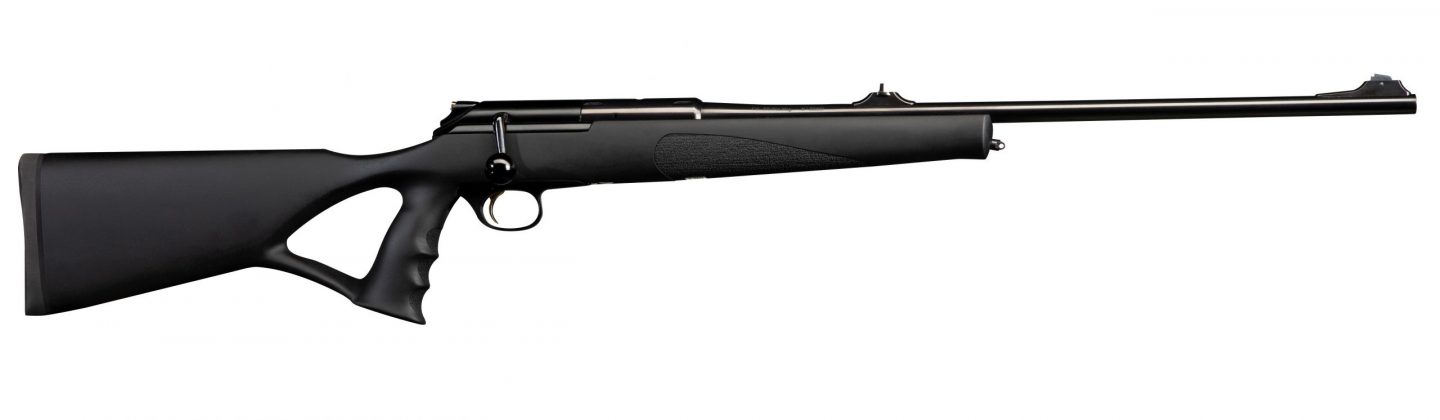
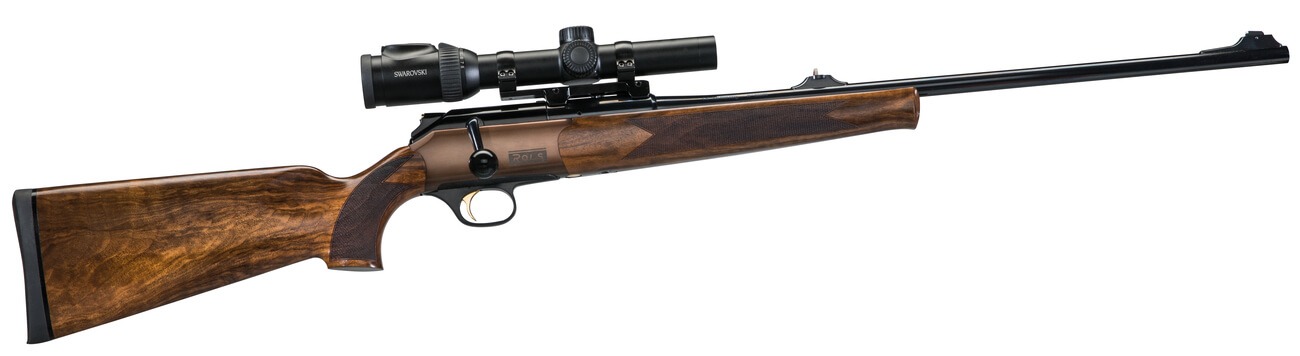
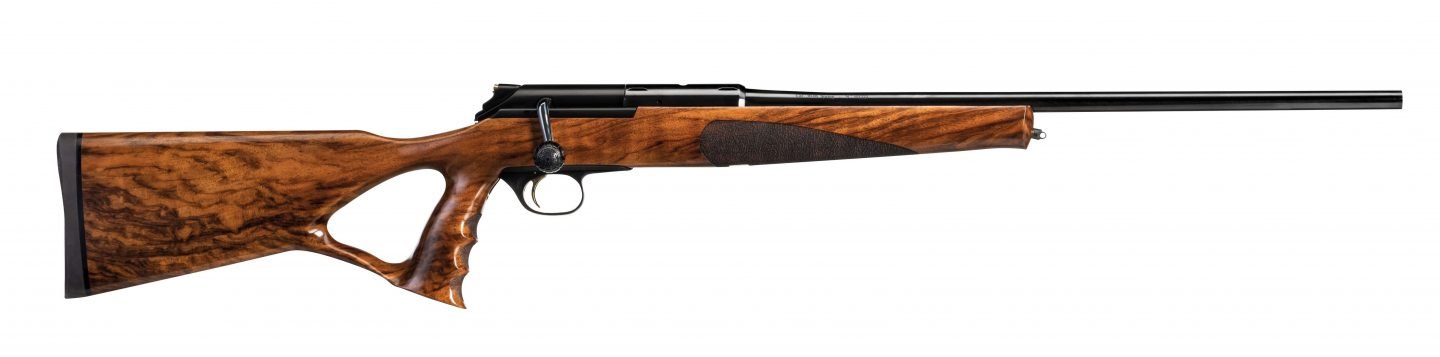
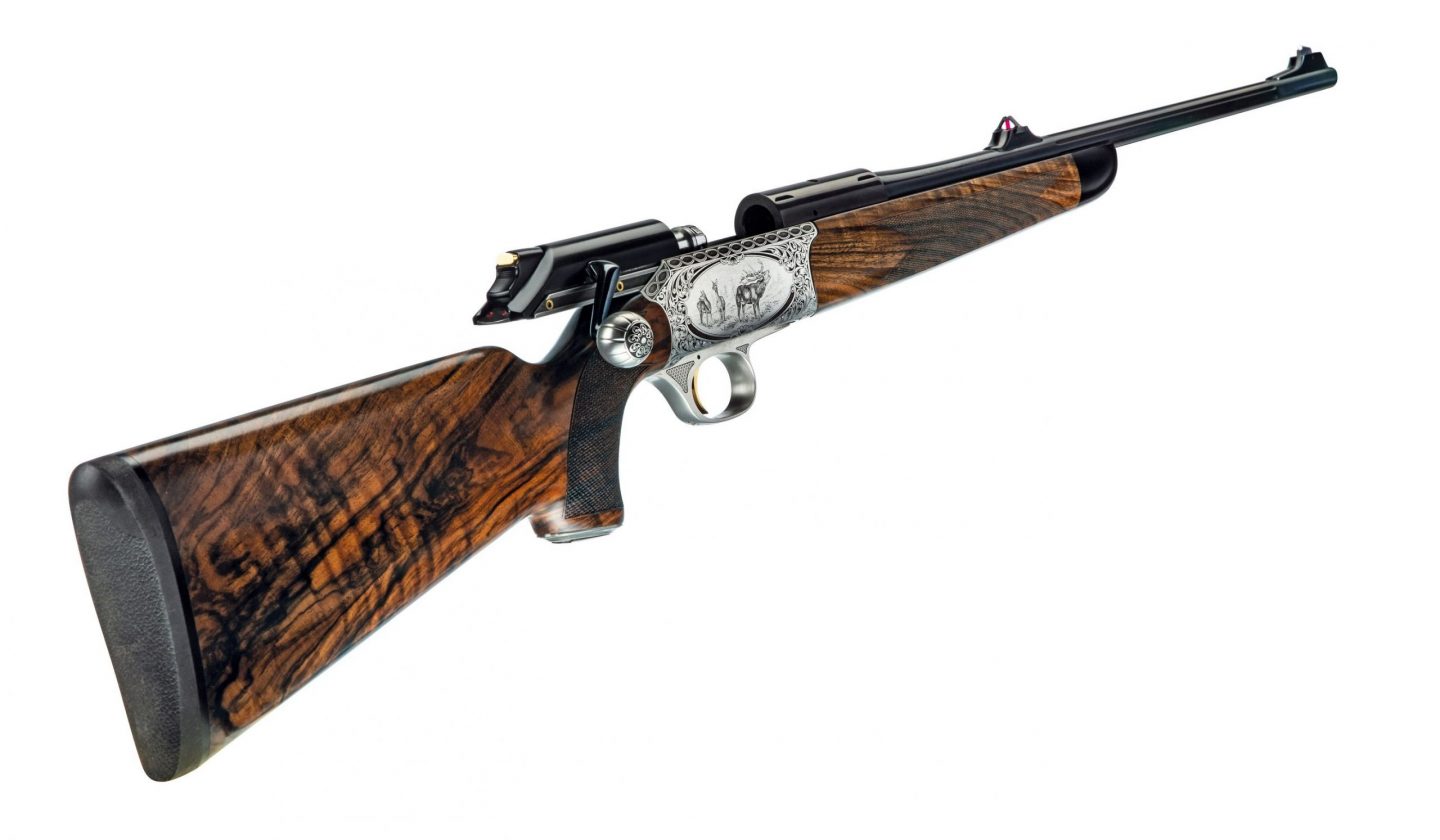



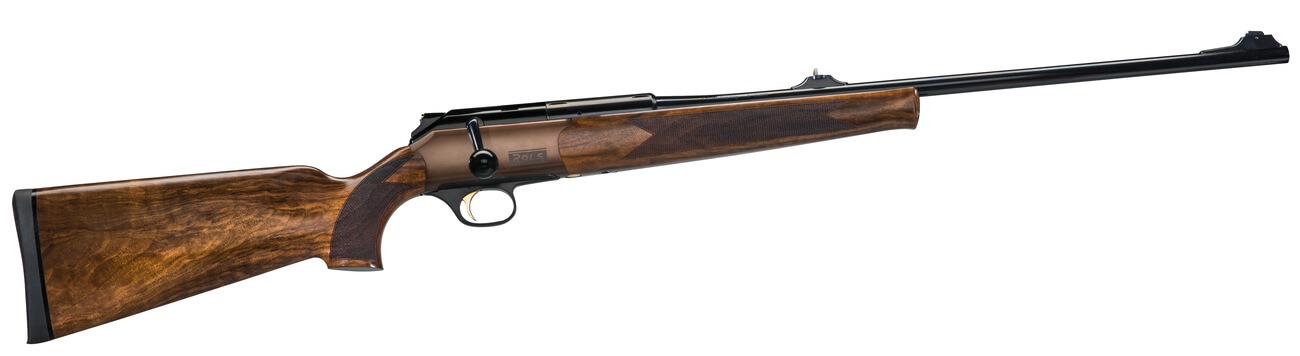
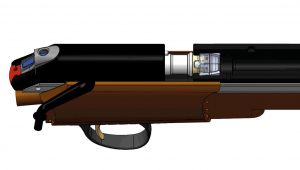
 The new CLS® (Chapuis Locking System) has been patented. It offers a total locking surface of 260 mm², making it one of the largest and safest systems on the market, as confirmed by extensive endurance testing at pressures exceeding 8,500 bars.
A BARREL WITH INTEGRAL LOCKING SYSTEM
This straight-pull locking system operates with a locking ring, divided into 7 segments, integrated into the barrel. The segments, articulated at their center, move back and forth to lock or release the bolt head.
AN INDESTRUCTIBLE LOCKING MECHANISM
The blocking sleeve, which slides along the bolt body, is driven by the cocking lever. This sleeve ensures optimal safety when locking the bolt head. The opening and closing of the 7 segments are directly controlled by this sleeve which, once locked, holds the segments in the closed position, preventing any unintended opening.
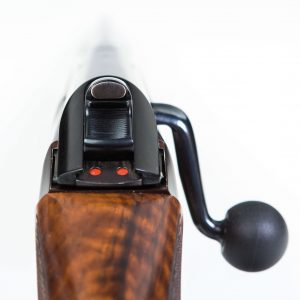
The ROLS® features an independent cocking device with perfect ergonomics. The cocking lever controls a piston that compresses the firing spring for shooting and releases it in the decocked position. This allows the hunter to carry the rifle safely with a cartridge in the chamber.
In the decocked position, the cocking lever is also locked, preventing any unintended movement of the bolt. The cocking device is topped with a push button that has been the subject of extensive development to ensure that decocking your rifle is as simple, safe and fast as possible, even when fitted with a scope and even when in a shooting position and you decide not to fire.
In this situation, on many competing rifles, it is not always easy to place your thumb under the scope to operate the decocking system.
On the ROLS®, it is easy, as a slight pressure of the thumb on the button located on top of the cocking lever releases the mechanism, thus decocking the rifle.
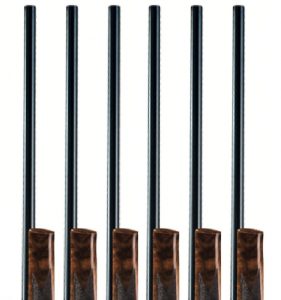
• Standard calibers, 60 cm barrel:
.243 Win / .30-06 / 7×64 / .270 Win / .308 Win / 6.5×55 SE
• Medium caliber, 60 cm barrel:
9.3×62
• Magnum calibers, 63 cm barrel:
.300 Win Mag / 7 Rem Mag
• African caliber, 65 cm barrel:
.375 H&H
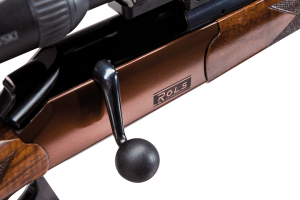
The cocking lever is located just above the trigger. Cycling the action becomes intuitive and very fast.
Safety has always been the primary concern in the development of this new rifle. As long as the cocking lever is not fully pushed into the vertical position and the bolt head is not completely locked, a patented passive safety system prevents contact between the firing pin and the cartridge primer.
An unintended discharge is therefore impossible.
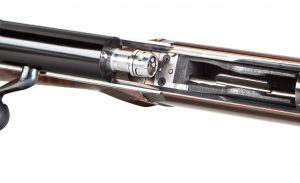 Our objective was to provide a feeding system aligned with the chamber, in order to avoid any feeding issues.
With this high-capacity rotating magazine (4 rounds + 1 in standard calibers and 3+1 in magnum calibers), the cartridges are perfectly aligned with the chamber.
Reloading is faster and smoother. We have also designed a cam system that operates with the movement of the bolt. As the bolt moves forward, the magazine lowers slightly into the receiver, eliminating any resistance caused by the transition of the cartridge between the magazine and the chamber.
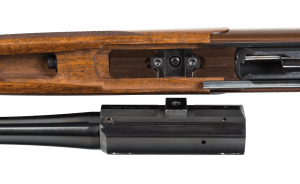
The barrel is mounted on a sleeve, allowing perfect control of headspace when assembling the two components. This sleeve features a precision-machined recoil lug, achieving tolerances below one hundredth of a millimeter with the steel bedding located in the receiver.
This level of precision ensures full interchangeability between any barrels, guaranteeing exceptional accuracy from the very first shot. The barrel can be easily installed or removed by tightening or loosening the screw located under the receiver using the supplied wrench.
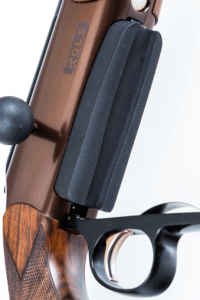
This magazine is positioned above the trigger guard and the trigger, reducing the overall length of the rifle. It is accessible in two steps.
First, a push button opens the trigger floorplate, allowing the magazine to be ejected in a second step.
This function has been intentionally separated to prevent any unintended ejection of the magazine. However, when needed, a quick reload with a new magazine is possible.
By maintaining constant pressure on the push button, the floorplate opens and the magazine is ejected simultaneously. You can then insert new cartridges. For even faster reloading, especially during driven big game hunts requiring multiple shots, it is also possible to load the magazine from the top of the rifle without removing it. For safety reasons, opening the magazine floorplate automatically decocks the rifle.
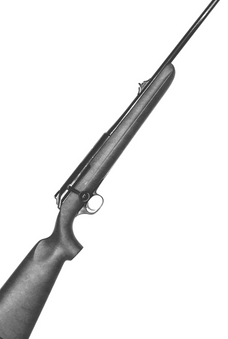
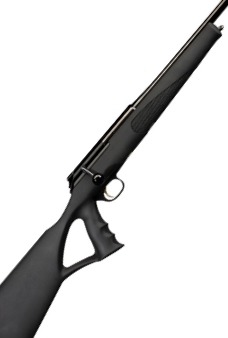
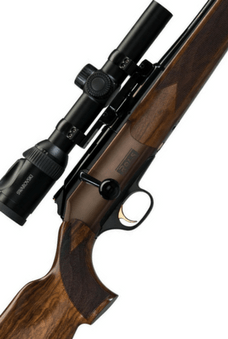
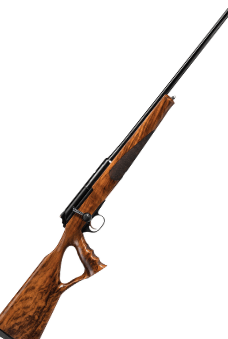
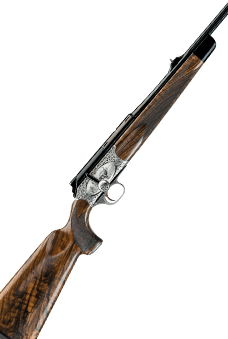
If you like the ROLS, the flagship straight-pull rifle by Chapuis Armes, you will love its 2.0 version, the ROLS.2
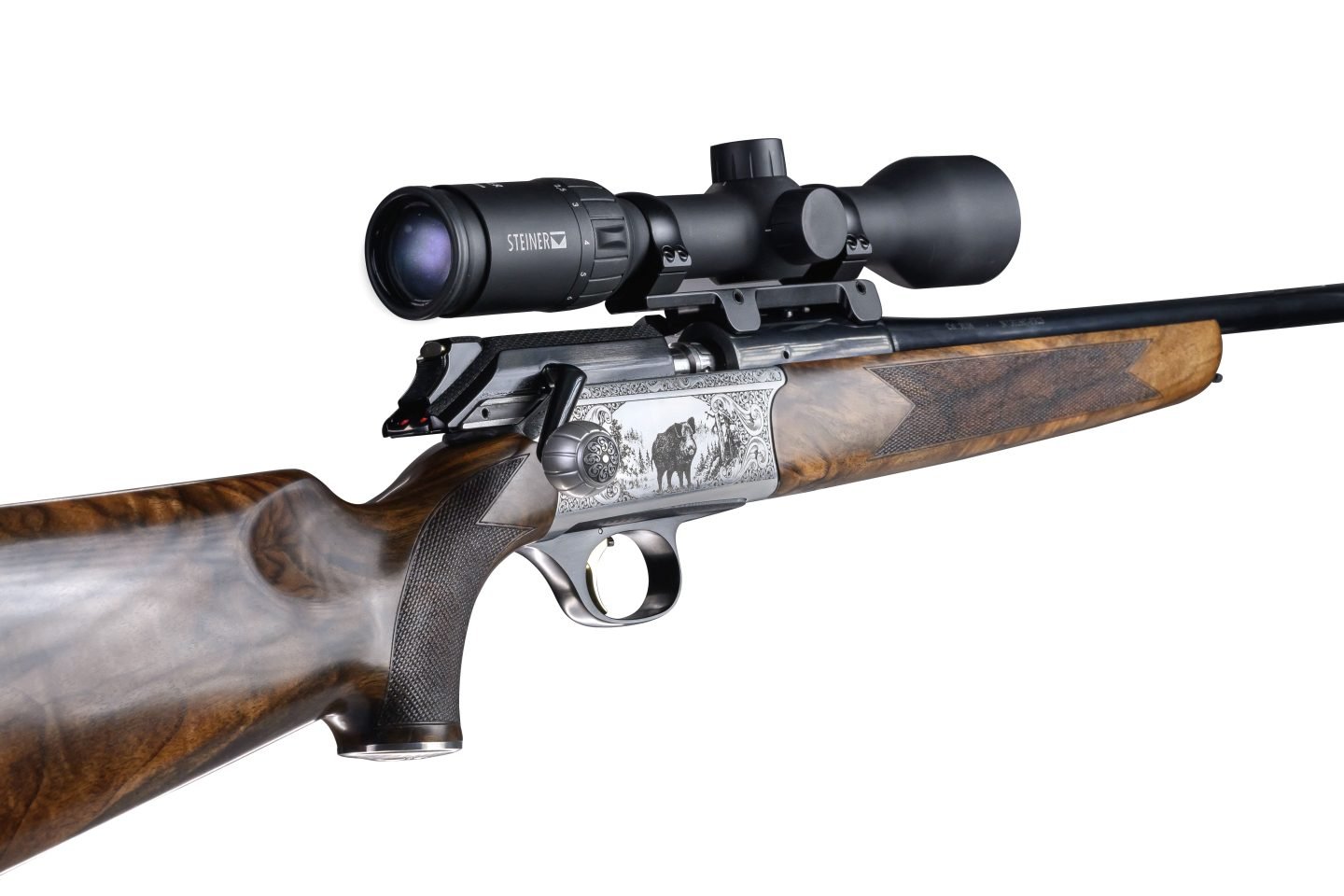
Highly appreciated by hunters for their versatility and smooth operation, straight-pull hunting rifles are becoming increasingly popular today.
Thanks to their enhanced accuracy and extended range, straight-pull rifles are widely used for big game hunting and stalking. They are therefore particularly popular hunting firearms.
In this article, we will explore the characteristics of straight-pull hunting rifles, their advantages and disadvantages, as well as the criteria to consider when choosing the rifle that best suits your needs.
The first straight-pull hunting rifles began to appear in Europe in the early 19th century. Their design was influenced by earlier firearms such as smoothbore hunting guns. The first straight-pull bolt-action systems were developed in Austria in the 1880s.
Straight-pull rifles were lighter and more manageable than smoothbore guns, and also offered greater range and improved accuracy thanks to their longer barrels and stronger locking mechanisms.
However, for many, the first modern straight-pull hunting rifle appeared in 1993 with the Blaser R93, the first commercially available model. This modern, modular, universal and easy-to-disassemble rifle adapts to all cartridge bases. Its features and rate of fire made it highly popular and helped establish the straight-pull trend.
Over the years, several brands have introduced their own straight-pull rifles. For example, Browning launched its Maral straight-pull rifle in 1998, followed by the Acera model in 1999.
The use of modern materials to reduce weight, the addition of optical sighting systems for improved accuracy, and the availability of various calibers have allowed these rifles to meet the specific needs of different hunting practices.
Today, straight-pull hunting rifles are widely used by hunters and sport shooters around the world.
There are different types of straight-pull hunting rifles. The choice of rifle will depend on the type of hunting you practice.
The bolt-action mechanism is the most common system used in straight-pull hunting rifles. This mechanism locks the firearm in the closed position before each shot, ensuring maximum safety.
The straight-pull locking system allows for fast and smooth reloading. With this system, the bolt handle is simply pulled and pushed in a straight line, without needing to be lifted or lowered, as the locking is automatic. This ease of operation enables extremely quick reloading.
The barrel length of straight-pull hunting rifles generally ranges from 50 to 70 cm. The barrel diameter depends on the caliber used and typically ranges between 12 and 16 mm for the most common calibers.
The stock is the part of the rifle that allows the shooter to hold it comfortably. It is usually made of wood or synthetic materials and can be adapted to the user’s build. Some models feature an adjustable stock to accommodate different shooting positions.
The weight of a straight-pull hunting rifle depends on the caliber, barrel length and the materials used for the stock and barrel. The lightest models weigh around 2.5 kg, while heavier ones can exceed 4.5 kg.
Straight-pull hunting rifles can be chambered in various calibers, ranging from small calibers such as .22 LR to larger ones like .308 Winchester or .30-06 Springfield. The choice of caliber depends on the type of game hunted and the shooting distance.
Effective range: the effective range of a straight-pull hunting rifle depends on the caliber, the quality of the scope and the shooter’s skill. In general, these rifles are effective at distances between 100 and 300 meters.
Most straight-pull hunting rifles are equipped with a scope to improve shooting accuracy. Scopes vary in brand and quality, with different magnification levels depending on the type of hunting and shooting distance.
Overall, the characteristics of a straight-pull hunting rifle vary depending on its intended use and the type of game hunted. It is important to choose a rifle that suits both the shooter and the hunting conditions.
The choice of caliber for a straight-pull hunting rifle depends on the type of game you intend to hunt and the distance at which you plan to shoot. The most commonly used calibers for hunting in France are 7×64, .30-06, .300 Winchester Magnum, 9.3×62 and 8×57 JS.
For light hunting such as small game (rabbit, hare, partridge), calibers like .22 LR or .17 HMR may be sufficient. However, for big game hunting such as wild boar or deer, a more powerful caliber will be required.
It is important to choose a caliber suited to your hunting situation and to ensure that the rifle is properly matched to it. It is also essential to comply with current regulations regarding authorized calibers for hunting. It is therefore recommended to seek advice from a professional before purchasing a straight-pull hunting rifle and selecting the caliber best suited to your needs.
Straight-pull hunting rifles are primarily used for big game hunting such as wild boar, deer, roe deer or chamois. Their effective range and accuracy make them an excellent choice for hunting in open terrain where longer-distance shooting is required.
However, straight-pull hunting rifles can also be used for small game hunting, such as rabbit or partridge, provided an appropriate caliber is used.
Finally, some people also use straight-pull rifles for sporting activities such as long-range shooting or target shooting competitions.
Choosing a straight-pull hunting rifle suited to your needs may seem challenging for beginners, but here are a few key factors to consider in order to make the right choice:
Type of hunting: the choice of rifle will depend on the type of game you intend to hunt and the distance at which you plan to shoot. Straight-pull rifles are well suited for long-distance big game hunting, while lighter calibers are more appropriate for small game at shorter ranges.
Caliber: as mentioned earlier, the choice of caliber depends on the type of game and shooting distance. It is important to select a caliber that is both legal and compliant with current regulations.
Build quality: a good straight-pull hunting rifle should be robust, durable and easy to handle. It is important to choose a high-quality rifle, preferably manufactured by a brand known for its craftsmanship.
Handling: the rifle should be comfortable to hold and easy to operate. The grip must be secure and stable to avoid any risk of accidents.
Scope: the scope is an essential accessory for a straight-pull hunting rifle. It must be of high quality and properly suited to the rifle to ensure maximum accuracy.
High accuracy: the straight-pull design provides excellent shooting accuracy, which is essential for long-range shooting.
Extended range: straight-pull hunting rifles are capable of shooting at longer distances than short-barrel firearms, making them ideal for hunting in open terrain.
Fast reloading: straight-pull rifles allow quick and easy reloading, with smooth operation and no complex lever movement.
Reduced recoil: thanks to their design, straight-pull rifles generate less recoil compared to short-barrel firearms, making aiming easier and reducing shooter fatigue.
Wide range of calibers: straight-pull rifles are available in a variety of calibers, allowing shooters to select the one best suited to their hunting and shooting style.
High durability: straight-pull rifles are built to withstand harsh hunting conditions, using strong and durable materials.
Mechanical reliability: the ability to remove the bolt allows for quick optic alignment by looking through the barrel (provided the bolt is not enclosed within a closed receiver).
Enhanced safety: there is no risk of leaving a round in the barrel once the firearm is secured (bolt open). An open bolt also provides a clear visual safety indication to others.
Easy maintenance: for example, systems such as the Bolt Barrel system of the RX Helix allow easy cleaning of both the barrel and the bolt. Simply remove the barrel and unscrew the bolt head— all components are easily accessible and ready for cleaning.
The price of a straight-pull hunting rifle can vary depending on several factors, including:
Brand: rifles manufactured by well-known and prestigious brands are often more expensive.
Caliber: rifles chambered in larger and more powerful calibers may be more costly.
Build quality: a rifle made from premium materials with a high level of finish will be more expensive than a lower-quality model.
Accessories: if the rifle is sold with accessories such as a scope, transport case or bipod, this can increase the overall price.
In general, the price of a straight-pull hunting rifle can range from a few hundred to several thousand euros, depending on the factors mentioned above. It is important to consider your needs and budget in order to choose the rifle that best suits you.
Highly appreciated by hunters for their versatility and smooth operation, straight-pull hunting rifles are becoming increasingly popular today.
Thanks to their enhanced accuracy and extended range, straight-pull rifles are widely used for big game hunting and stalking. They are therefore particularly popular hunting firearms.
In this article, we explore the characteristics of straight-pull hunting rifles, their advantages and disadvantages, as well as the criteria to consider when choosing the rifle that best suits your needs.
The first straight-pull hunting rifles began to appear in Europe in the early 19th century. Their design was influenced by earlier firearms such as smoothbore hunting guns. The first straight-pull bolt-action systems were developed in Austria in the 1880s.
Straight-pull rifles were lighter and more manageable than smoothbore guns, while also offering greater range and improved accuracy thanks to their longer barrels and stronger locking mechanisms.
However, for many, the first modern straight-pull hunting rifle appeared in 1993 with the Blaser R93, the first commercially available model. This modern, modular, versatile and easy-to-disassemble rifle accommodates a wide range of cartridge bases. Its features and rate of fire made it highly popular and helped establish the straight-pull trend.
Over the years, several brands have introduced their own straight-pull rifles. For example, Browning launched its Maral straight-pull rifle in 1998, followed by the Acera model in 1999.
The use of modern materials to reduce weight, the addition of optical sighting systems for improved accuracy, and the availability of various calibers have enabled these rifles to meet the specific needs of different hunting practices.
Today, straight-pull hunting rifles are widely used by hunters and sport shooters around the world.

